Jesus Christ Laser Engrave File: A Strategic Asset for Digital Fabrication Workflows
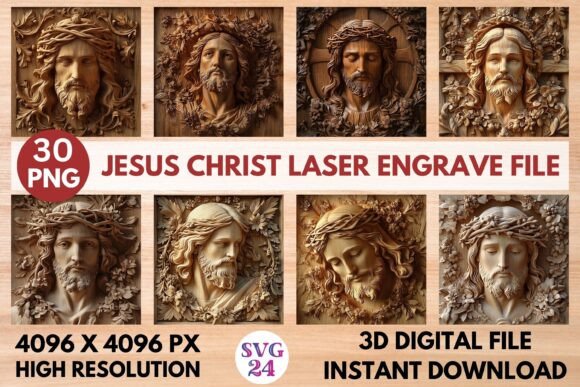
In the realm of digital fabrication and laser engraving, the quality of your source material is often the single most critical variable determining the final output. For creators operating within the intersection of faith-based artistry and commercial production, finding a design that balances spiritual reverence with technical precision is essential. The Jesus Christ Laser Engrave File, specifically the version featuring an amazing 3D effect in PNG format ready to print, serves as a robust component in this workflow. It is not merely an image; it is a specialized asset optimized for grayscale raster engraving, designed to integrate seamlessly into the operational routines of modern laser machine owners.
This article explores how this premium PNG design fits into broader creative and business processes, from initial file preparation to final product delivery. We will examine its technical specifications, compatibility with major software ecosystems, and practical applications across diverse industries including home decor, textile printing, and packaging.
Understanding the Technical Foundation: Grayscale Raster Engraving
To effectively utilize the Jesus Christ Laser Engrave File, one must first understand the underlying technology. Unlike vector cut files (SVG) which define paths for cutting or etching lines, this file is a high-resolution raster image prepared in grayscale. In laser engraving, particularly with CO2 and fiber lasers, grayscale images are interpreted by the machine’s control software based on brightness levels. Darker pixels receive more energy, resulting in deeper or darker engravings, while lighter areas receive less, creating highlights and depth.
The provided package includes both 15 Coloring PNGs and 15 Grayscale PNGs, all at a resolution of 4096x4096 pixels. This high resolution is non-negotiable for professional results. When scaling these designs down for smaller items like stationery or up for larger home decor pieces, the pixel density ensures that no jagged edges or blurriness appear. The transparent background feature further streamlines the workflow, allowing users to overlay the design onto various textures—such as wood grain, fabric weaves, or metallic surfaces—without needing complex masking steps in external graphic design software.
Software Compatibility and System Integration
A significant friction point in laser engraving projects is software incompatibility. The Jesus Christ Laser Engrave File is engineered to work natively with the most prevalent laser control platforms. Whether you are operating a Glowforge, xtool, Sculpfun, Lightburn, or a generic CO2 laser cutting machine, the PNG format is universally supported. However, successful integration requires attention to detail during the setup phase.
Before initiating any job, ensure your machine and software are compatible with high-resolution raster imports. Lightburn, for instance, allows for precise adjustment of power and speed settings per grayscale value. Users should import the grayscale PNG directly into their workspace. It is crucial to verify that the image mode is set correctly; if the software interprets the image incorrectly, the contrast may be lost, resulting in a faint or muddy engraving. Always perform a test run on scrap material of the same type and finish as your final product. This step validates that the laser’s focal length and power curve align with the specific tonal range of the PNG file.
Pre-Purchase Verification Checklist
- Resolution Check: Confirm that your target substrate can accept 4096x4096 pixel details. Fine textures may be lost on coarse materials like thick raw timber.
- Software Settings: Ensure your laser controller supports grayscale mapping. Most modern controllers do, but older models may require conversion to bitmap formats.
- File Format Awareness: Remember that this is a PNG file set, not a layered SVG. You cannot edit individual elements (like the cross or facial features) independently after purchase. The buyer is responsible for resizing and positioning the design to fit their chosen product dimensions.
Strategic Applications Across Product Lines
The versatility of the Jesus Christ Laser Engrave File allows it to serve multiple segments of the maker economy. By integrating this asset into different production pipelines, entrepreneurs can diversify their offerings without investing in new design resources.
Home Decor and Woodworking
Wooden signs and wall art remain a staple in the laser engraving market. The 3D effect inherent in this design creates a striking visual depth when engraved into medium-density fiberboard (MDF), plywood, or solid hardwoods. The process begins with selecting a wood species that has a light, uniform surface to maximize contrast. During the engraving phase, use higher power settings to burn deeper into the pores of the wood, enhancing the "carved" look. The grayscale nature of the file allows for subtle shading in the facial features of the figure, moving beyond simple line art into realistic portraiture.
Textiles and Fashion Accessories
While lasers typically cut fabric, they can also engrave leather and certain synthetic textiles. Using the coloring PNGs, designers can create heat-transfer prints or direct-engraved patches. For leather goods such as wallets, belts, or journals, the high-contrast grayscale image burns cleanly, providing a sophisticated branding element. The key here is consistency; ensure the leather is tanned uniformly to avoid blotchy results. The transparent background of the PNG allows for easy placement over existing logos or patterns on the garment.
Packaging and Stationery
For small business owners, packaging is a powerful marketing tool. The Jesus Christ Laser Engrave File can be used to create custom boxes, tags, and greeting cards. Because the file is high-resolution, it maintains clarity even when scaled down to fit small gift tags. This is particularly effective for holiday seasons or religious observances where demand for themed stationery spikes. The ability to print these designs directly onto paper or cardstock using laser printers (if the PNG is used for standard printing) or via laser engravers on wood veneers offers a tactile premium feel that digital inkjet prints cannot replicate.
Workflow Optimization and Quality Control
Integrating this digital asset into a daily workflow requires discipline. Since the file is not editable, the burden of adaptation falls on the creator. Here are practical tips for maintaining efficiency and quality:
- Asset Organization: Upon download, immediately organize the zip file contents into dedicated folders labeled by theme or project type. Separate the coloring PNGs from the grayscale versions to prevent accidental misuse.
- Scaling Strategy: Before importing into laser software, resize the PNGs in a basic image editor to match your working area. This reduces processing time for the laser controller and minimizes memory errors.
- Contrast Adjustment: While the file is pre-optimized, slight adjustments in brightness and contrast within your laser software can fine-tune the result. If the engraving appears too dark, reduce the overall opacity or adjust the gamma curve in Lightburn.
- Material Testing: Maintain a library of test squares for each material type you use. Label them with the specific power/speed settings that worked best for the Jesus Christ PNG. This builds institutional knowledge and speeds up future production runs.
Long-Term Value and Commercial Considerations
Investing in a premium PNG design like the Jesus Christ Laser Engrave File is a strategic decision for long-term inventory stability. Unlike trends that fade quickly, faith-based imagery has enduring appeal. The 3D aesthetic adds a layer of sophistication that distinguishes products from mass-produced alternatives. Furthermore, because the file is delivered as a digital download, there are no recurring costs or shipping delays. You own the asset indefinitely, allowing you to experiment with new product lines years later without additional investment.
However, buyers must respect the limitations. The lack of editability means you cannot remove backgrounds or alter compositions. This constraint actually encourages creativity in how the image is applied rather than modified. It forces the designer to focus on composition, material choice, and finishing techniques to elevate the final piece.
Conclusion
The Jesus Christ Laser Engrave File represents more than just a decorative image; it is a functional tool designed for serious laser engraving workflows. Its high-resolution grayscale structure ensures compatibility with leading machines like Glowforge and xtool, while its artistic depth appeals to consumers seeking meaningful home decor and gifts. By understanding the technical requirements, respecting the file’s limitations, and applying rigorous quality control measures, creators can integrate this asset smoothly into their businesses. Whether producing wooden signs, leather accessories, or custom packaging, this PNG set provides the foundation for professional, striking, and precise results that resonate with end-users.