Abstract Metallic Textures Collection: A Comprehensive Guide to Digital Design Assets
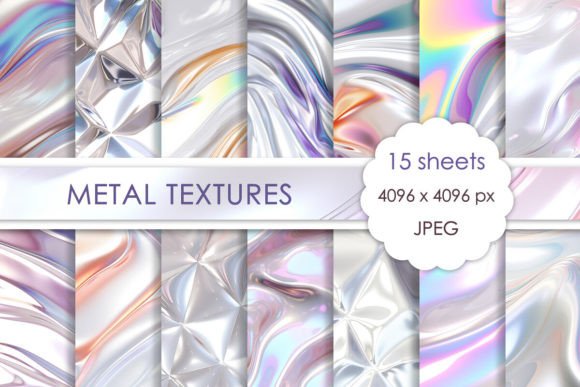
In the contemporary landscape of digital design, the demand for high-fidelity visual assets has never been greater. As interfaces become more immersive and print media strives for tactile realism, designers are increasingly turning to complex surface qualities to add depth and sophistication to their work. Among these, metallic finishes remain a perennial favorite, evoking feelings of luxury, futurism, and industrial precision. The Abstract Metallic Textures Collection emerges as a pivotal resource in this domain, offering a curated suite of 15 high-resolution JPEG files designed to elevate creative projects through lustrous sophistication.
This collection is not merely a set of background images; it is a toolkit for texture synthesis. By leveraging the dynamic and reflective qualities of metal with a modern twist, creators can introduce elements that range from gentle wave-like undulations to bold holographic effects. This guide explores the technical specifications, practical applications, and strategic advantages of integrating abstract metallic textures into professional workflows, catering to a broad spectrum of users from graphic designers to 3D artists and hobbyist crafters.
The Anatomy of a Premium Texture Pack
Understanding the value of the Abstract Metallic Textures Collection requires an examination of its core components. In digital asset markets, quality is often determined by resolution, format efficiency, and visual variety. This pack addresses each of these criteria with precision.
Resolution and Scalability
At the heart of this collection is a uniform resolution of 4096 x 4096 pixels. For context, this dimension provides approximately 16 megapixels per image, which is significantly higher than standard web resolutions (typically 1920x1080 or 4K). This high pixel count serves two primary functions:
- Print Fidelity: Large-scale prints, such as banners, posters, or exhibition backdrops, require dense pixel data to avoid jagged edges or blurriness when viewed up close. These textures maintain crisp detail even when scaled to physical dimensions.
- Cropping Flexibility: Designers often need to isolate specific sections of a texture for use as subtle patterns or corner accents. The generous resolution allows for aggressive cropping without sacrificing clarity, providing multiple usable assets from a single file.
Format Efficiency
The decision to distribute these assets as JPEG files rather than TIFF or PSD is a strategic one aimed at usability. While lossless formats preserve every byte of data, they result in massive file sizes that can slow down project loading times and complicate storage management. The textures in this collection are carefully compressed to maintain the highest possible visual quality while keeping file sizes manageable. This ensures that users can easily import them into various software environments—from Adobe Photoshop and Illustrator to simpler mobile editing apps—without encountering performance bottlenecks.
Visual Diversity
A common pitfall in texture packs is homogeneity, where all images look like variations of the same brushed steel. The Abstract Metallic Textures Collection avoids this by presenting a diverse array of metallic characteristics. Users will find textures ranging from liquid metal smoothness, which mimics mercury or molten silver, to crumpled foil complexity, which captures the chaotic interplay of light on folded surfaces. This variety ensures that whether a project requires a sleek, futuristic aesthetic or a gritty, industrial feel, there is a suitable match within the 15 included files.
Practical Applications Across Creative Disciplines
The versatility of abstract metallic textures allows them to be integrated into a wide array of creative disciplines. Below, we examine how different user groups can leverage these assets to enhance their output.
Graphic Design and Branding
For graphic designers, metallic textures serve as powerful tools for brand identity and marketing materials. They are particularly effective in creating backgrounds for logos, business cards, and packaging designs. By overlaying a subtle metallic texture onto a solid color background, designers can create a sense of depth that flat colors cannot achieve. Furthermore, these textures are ideal for creating "digital paper" effects in editorial layouts, adding a layer of visual interest to magazine spreads or digital newsletters.
3D Modeling and Rendering
In the realm of 3D art, textures are essential for defining material properties. The Abstract Metallic Textures Collection can be used as diffuse maps or bump maps to give 3D models a realistic metallic sheen. Because the textures feature abstract patterns rather than literal representations of objects, they provide a neutral yet sophisticated base that can be manipulated using normal and roughness maps in software like Blender, Maya, or Cinema 4D. This allows 3D artists to simulate everything from polished chrome to oxidized copper with ease.
Digital Art and Wallpaper Creation
Hobbyists and digital painters often seek unique backgrounds to inspire their compositions or to use as wallpapers for desktops and smartphones. The high resolution of these files makes them perfect for ultra-wide monitors and high-DPI mobile screens. The holographic and iridescent qualities found in some of the textures can create striking visual experiences that change depending on the viewing angle or screen lighting, making them highly engaging for personal device customization.
Physical Product Sublimation
One of the most lucrative applications for these textures lies in the world of custom merchandise. Businesses involved in sublimation printing—creating physical products like phone cases, mugs, t-shirts, and mouse pads—can utilize these digital assets as base designs. The rich metallic tones translate well to printed substrates, allowing small business owners to offer premium-looking products without the cost of physical metallic materials. The JPEG format ensures compatibility with most sublimation printing software, streamlining the workflow from digital file to physical product.
Strategic Considerations for Implementation
While the Abstract Metallic Textures Collection offers significant benefits, successful integration requires an understanding of best practices. Designers should consider the following factors to maximize the impact of these textures.
Contrast and Legibility
Metallic textures are inherently busy and reflective. When using them as backgrounds for text or critical UI elements, contrast becomes paramount. To ensure readability, designers should apply overlays, drop shadows, or semi-transparent layers between the texture and the content. This technique preserves the visual appeal of the metal while maintaining functional accessibility.
Color Harmony
Metallics do not exist in isolation; they reflect their environment. When incorporating these textures into a design, it is crucial to consider the surrounding color palette. Cool-toned metals like silver and platinum pair well with blues, grays, and whites, evoking a sense of technology and cleanliness. Warm-toned metals like gold and bronze complement reds, oranges, and earth tones, suggesting warmth and tradition. Understanding these associations helps in selecting the right texture from the 15 available options for a given project.
Lighting Consistency
For advanced users working in composite images, consistency in lighting direction is key. If a metallic texture features highlights on the left side, other elements in the composition should ideally reflect light from the same source. This attention to detail enhances the realism of the final image, making the metallic elements appear as if they naturally belong in the scene rather than being pasted on top.
Why Choose Abstract Over Literal?
A common question among new designers is why they should use abstract metallic textures instead of photographs of real metal sheets. The answer lies in abstraction and control. Literal photographs often contain unwanted details—scratches, dust, fingerprints, or specific manufacturing marks—that may distract from the design goal. Abstract textures provide the *essence* of metal—the shine, the grain, the reflection—without the clutter. This allows for greater artistic freedom, enabling designers to manipulate the texture’s opacity, blend modes, and scale to suit their specific creative vision without fighting against the inherent imperfections of a photographic reference.
Conclusion
The Abstract Metallic Textures Collection represents a thoughtful convergence of technical quality and artistic versatility. With its 15 high-resolution JPEG files, it caters to the needs of professionals seeking efficiency and consumers looking for inspiration. Whether used to add a touch of luxury to a brand identity, to provide realistic shading for 3D models, or to create stunning wallpapers, these textures offer a modern twist on classic metallic aesthetics. By understanding their characteristics and applying them with strategic consideration, creators can unlock new levels of sophistication in their work, transforming simple digital compositions into visually compelling experiences.